About this book
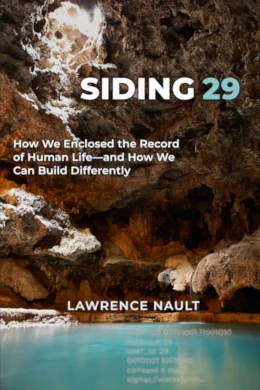
I wrote Siding 29 because I became increasingly uncomfortable with where most conversations about privacy begin. We tend to start after the information already exists—after the location has been recorded, the purchase logged, the profile built, the inference made. Then we argue about consent, access, retention, disclosure and who is allowed to use it. Those are important questions, but I kept coming back to an earlier one: did this record need to exist in the first place?
The book began in Alberta’s Bow Valley, with the history of the hot springs at Cave and Basin and the railway siding that would become Banff. I was struck by the way value that already existed within relationships could be separated from those relationships, enclosed, claimed and eventually administered by a new authority. I am careful throughout the book not to equate the enclosure of land with the enclosure of information. They are not equivalent harms. But the history gave me a way to examine a pattern I kept seeing in the digital world: something created through ordinary human life becomes detached from the people and relationships that produced it and turned into infrastructure controlled somewhere else.
The research took me through privacy law, data brokers, location tracking, loyalty programs, connected vehicles, behavioural advertising, surveillance pricing, artificial intelligence, government systems, Indigenous data sovereignty and technologies designed to collect less rather than more. What interested me was not simply what each system does, but the assumptions underneath it—especially the assumption that collecting more information is a natural part of technological progress. I do not think innovation and maximum extraction are the same thing.
I wrote Siding 29 for people who use technology, which is nearly everyone, not just privacy specialists or policymakers. My hope is that readers finish the book noticing the systems around them a little differently and asking better questions about them. Not only: Who has my data? What are they doing with it? But also: Why was this information collected? Who had the authority to decide? Could the system have worked without it? And what might we build differently if we asked those questions at the beginning instead of the end?