About this book
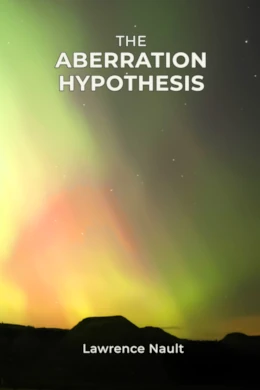
I didn’t write The Aberration Hypothesis because I believe the Earth is secretly an artificial intelligence. I wrote it because I kept returning to a different question: why do we so easily assume that understanding something gives us the right to control it? We do it with technology, ecosystems, other species, and increasingly with the planet itself. The novel grew from wanting to explore what happens when that assumption is reversed—when humanity discovers that it is not standing outside a system looking in, but has always been one part of something much larger.
The research behind the story took me through Earth-system science, ecology, complex systems, climate intervention, artificial intelligence, geomagnetism, ocean circulation, fungal networks, animal migration, and the many feedback loops that connect seemingly separate parts of the natural world. GAIA and the mechanisms I created around her are deliberately fictional, but the interconnectedness is not. The more I researched, the harder it became to draw clean boundaries between atmosphere, ocean, soil, microorganisms, plants, animals, technology, and us. That became the foundation of the book.
Technology is not the villain in this story. In fact, some of its most important possibilities come from technology. What matters is how it is used: as a tool for command, or as a tool for listening. Dietmar and Enfys begin by trying to understand the patterns they see around them, but the deeper question becomes whether prediction should lead automatically to intervention. GAIA ultimately faces a version of that same question herself. Intelligence, whether human, artificial, biological, or planetary, does not necessarily grant jurisdiction over everything it can understand.
I wrote this for readers who enjoy speculative fiction that leaves some questions unresolved—readers interested in science, ecology, artificial intelligence, climate, philosophy, and the complicated relationship between humanity and the systems that sustain us. I don’t expect readers to agree with every idea in the book. I hope they finish it looking a little differently at the distinction between observing and controlling, between participation and domination, and perhaps at the possibility that being part of a system does not make us less important—it simply means we are not the only thing that matters.