The Draconim Series Book 1
Lawrence Nault · YA Environmental Fantasy · Published 2023
Lawrence Nault wrote Draconim Lacrima Mortis from a belief that environmental collapse should not be treated as background scenery, but as a living wound with emotional, political, and generational consequences. The book uses dragons, myth, and young protagonists to explore toxic pollution, corporate negligence, Indigenous perspectives, eco-anxiety, identity, and the difficult question of what people owe to a damaged planet. Distinct from traditional dragon fantasy, it grounds its magic in contemporary ecological crisis, making the dragons not symbols of escape, but witnesses to what humanity has ignored.
Draconim Lacrima Mortis began with a simple question that has stayed with me through much of my environmental fiction: what if the Earth is not silent? What if the damage we do is not just measured in reports, studies, and political arguments, but felt by something ancient enough to remember what the world was before we started taking it apart? I wanted to write a dragon story, but not one where dragons were just weapons, pets, or symbols of power. I wanted them to be witnesses.
This book is about environmental destruction, corporate negligence, political denial, and the way young people inherit crises they did not create. It moves through toxic pollution, ecological grief, Indigenous perspectives, identity, activism, and the uneasy realization that saving the world is not a clean or simple thing. The fantasy elements are there, but they are not an escape from the real world. They are a way of looking more directly at it.
Much of what shaped this story came from watching how environmental disasters are discussed after the damage is already done. There is always a language of containment, mitigation, acceptable loss, and economic necessity. But land, water, animals, and communities do not experience harm in percentages. They experience it as loss. That is the space this book lives in: the place where wonder and grief meet, and where courage is not the absence of fear, but the decision to act while carrying it.
I hope readers come away from Draconim Lacrima Mortis asking harder questions about accountability, responsibility, and what it means to belong to a living planet. For younger readers, I hope it gives shape to the eco-anxiety many already feel. For educators and librarians, I hope it offers a story that can open conversations about climate, pollution, activism, Indigenous knowledge, grief, and resilience without speaking down to young people.
This book is written for readers who still believe fantasy can tell the truth. It is for teens, parents, educators, librarians, and curious readers who understand that dragons do not have to pull us away from reality. Sometimes, they help us see it more clearly.
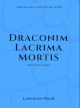
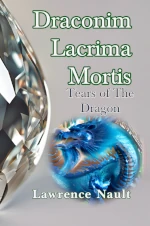
Draconim Lacrima Mortis
2023
Feeding The Fires
2024
Fingerprints In The Water
2025
Shattered Ice
2025
Free downloadable guides for educators, librarians, and book clubs.
Draconim: Lacrima Mortis is well suited for Grades 8–12 and can be taught as a 4–6 week cross-curricular unit connecting English Language Arts, Environmental Science, Social Studies/Civics, Media Studies, Art, and Indigenous Studies. Its curriculum value comes from the way the novel blends YA fantasy with real-world environmental issues, giving students opportunities to examine pollution, ecosystem damage, youth activism, corporate and government responsibility, media literacy, traditional ecological knowledge, personal identity, and community action through reading journals, literary analysis, research, discussion, creative response, and project-based learning.
Download PDFTheDraconim: Lacrima Mortis Book Club Discussion Guide provides readers, teachers, and book groups with a structured way to explore the novel’s major themes, including environmental responsibility, youth activism, connection to nature, personal identity, science and magic, hope, and sacrifice. It includes pre-discussion activities, theme-based questions, deeper engagement exercises, creative response prompts, environmental action planning, Indigenous environmental stewardship connections, recommended books and films, further reflection questions, and practical extensions such as community cleanups, awareness campaigns, and documenting local environmental change.
Download PDF