The Draconim Series Book 3
Lawrence Nault · YA Environmental Fantasy · Published 2025
Lawrence Nault wrote Fingerprints In The Water to turn ocean pollution from an abstract environmental issue into something immediate, personal, and impossible to ignore. At its core, the book is about the hidden damage humanity leaves in the water—plastic, waste, silence, and denial—and the young people forced to listen when the natural world can no longer wait. What makes it distinct is the way it blends dragon mythology with marine ecology, giving the ocean not just a crisis, but a voice.
I wrote Fingerprints In The Water because the ocean is too often treated as something distant, even by those of us whose lives depend on it. We see the images of plastic-covered beaches, tangled whales, dead birds, and floating garbage patches, but we are taught to experience them as separate headlines. I wanted to bring that damage closer. Not as a lecture, but as a story where the ocean is alive, wounded, remembering, and still reaching out.
At the heart of this book is Kai Chen, a fifteen-year-old boy in Cape Breton who feels caught between belonging and leaving, between the life his family built from the sea and the future he imagines somewhere else. Through Kai’s bond with Uranus, the ancient dragon of the ocean, the book explores pollution, ghost gear, microplastics, marine rescue, community responsibility, and the quiet ways young people begin to understand that the world they are inheriting has already been changed for them.
The research behind the story comes from the real conditions facing the oceans: plastic waste that never truly disappears, fishing gear that keeps killing long after it is lost, contaminants that move through currents and food chains, and the growing recognition that environmental harm is never isolated. But I also wanted to root the story in human and cultural connection — family, migration, Indigenous knowledge, local fishing communities, youth activism, and the complicated relationship between earning a living from the sea and protecting it.
What I hope readers take away is not despair, but responsibility. The ocean is not simply a setting, a resource, or a place to send what we do not want to see. It is part of the living system that makes us possible. Fingerprints In The Water is written for young readers, educators, librarians, and anyone who believes stories can help us feel what facts alone sometimes cannot: that the damage we leave behind still carries our shape, and that choosing differently is still within our hands.
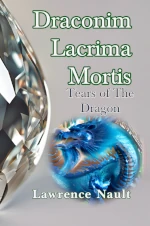
Draconim Lacrima Mortis
2023
Feeding The Fires
2024
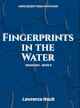
Fingerprints In The Water
2025
Shattered Ice
2025
Free downloadable guides for educators, librarians, and book clubs.
Draconim: Lacrima Mortis is well suited for Grades 8–12 and can be taught as a 4–6 week cross-curricular unit connecting English Language Arts, Environmental Science, Social Studies/Civics, Media Studies, Art, and Indigenous Studies. Its curriculum value comes from the way the novel blends YA fantasy with real-world environmental issues, giving students opportunities to examine pollution, ecosystem damage, youth activism, corporate and government responsibility, media literacy, traditional ecological knowledge, personal identity, and community action through reading journals, literary analysis, research, discussion, creative response, and project-based learning.
Download PDFTheDraconim: Lacrima Mortis Book Club Discussion Guide provides readers, teachers, and book groups with a structured way to explore the novel’s major themes, including environmental responsibility, youth activism, connection to nature, personal identity, science and magic, hope, and sacrifice. It includes pre-discussion activities, theme-based questions, deeper engagement exercises, creative response prompts, environmental action planning, Indigenous environmental stewardship connections, recommended books and films, further reflection questions, and practical extensions such as community cleanups, awareness campaigns, and documenting local environmental change.
Download PDFFree downloadable guides for educators, librarians, and book clubs.
Fingerprints In The Water is recommended for grades 7–10 and connects well with English Language Arts, Environmental Science, and Social Studies. The novel supports curriculum discussions around water pollution, microplastics, climate justice, youth activism, grassroots leadership, intergenerational knowledge, media literacy, and environmental communication. In ELA, students can explore character, symbolism, theme, speculative fiction, and how storytelling can turn real-world issues into meaningful action. In science and social studies, the book connects to ecosystems, water systems, human impact, corporate negligence, community responsibility, and youth-led responses to environmental crisis. Classroom extensions may include plastic-use audits, research on youth climate leaders, literary-symbolism essays, media role play, personal action plans, and reflective writing on the “fingerprint” students hope to leave on the world.
Download PDFThe Fingerprints In The Water book club guide gives readers a discussion-focused companion to the novel, beginning with an overview of the story’s focus on dragon-bonded teens confronting water contamination, microplastics, environmental justice, youth power, and grassroots change. It includes questions on major themes such as teen-led activism, pollution, the symbolic role of dragons, community action versus institutional systems, and emotional resilience, along with character-focused prompts about Kai, Amy, the Young Dragons, and adult allies. The guide also connects the novel to real-world water issues and youth climate movements, then offers activities such as organizing a local cleanup, testing water quality, creating a “dragon ally” journal prompt, and researching movements like Fridays for Future or Water Protectors. It closes by asking readers what “fingerprints” they want to leave behind and what small action the book inspires them to take.
Download PDFW.A.V.E. 4000, or Water Awareness Via Education, is an open-source citizen science and environmental education project inspired by Fingerprints In The Water but designed for real-world use by schools, educators, youth groups, scientists, conservation organizations, and communities. Its core idea is simple: students collect and study water samples using a mesh size determined by the formula “4000 ÷ grade,” allowing the project to grow with students from visible debris in early grades to near-invisible microplastics by Grade 12. The project combines hands-on science, data collection, shoreline observation, local cleanups, water testing, Indigenous knowledge partnerships, and public sharing of findings, with a global vision of youth-led water stewardship connected to clean water, climate action, and life below water.
Download PDF