The Draconim Series Book 4
Lawrence Nault · YA Environmental Fantasy · Published 2026
Lawrence Nault wrote Shattered Ice as part of the Draconim series to explore climate change through the eyes of young people who are often expected to inherit consequences they had no power in creating. The book is really about northern ice, fossil-fuel expansion, disrupted migration, water, wildlife, grief, and youth-led ecological responsibility. What makes it distinct is its blend of dragons, environmental realism, and teen activism, treating the natural world not as a backdrop but as a living system with memory, agency, and consequence.
Shattered Ice grew out of my ongoing concern with the places we too often treat as distant, empty, or expendable. The North is frequently spoken about in terms of resources, shipping routes, sovereignty, pipelines, extraction, and development, but less often as a living system already carrying enormous strain. I wanted to write a story that brought young readers into that tension through wonder, grief, danger, friendship, and the ancient presence of dragons who are not here to save humanity from responsibility, but to remind us of it.
Like the other books in the Draconim series, Shattered Ice uses fantasy to approach real ecological wounds. This book turns toward melting northern ice, fossil-fuel expansion, disrupted caribou migration, fragile waterways, wildlife displacement, and the emotional weight young people carry when they realize the future is being negotiated without them. The research behind it comes from real environmental concerns: thawing permafrost, climate feedback loops, northern development pressures, animal migration corridors, and the way industrial decisions can fracture landscapes long before the damage becomes visible to people far away.
At its heart, though, this is not a textbook hidden inside a novel. It is a story about Ethan, Noah, the Young Dragons, and the difficult work of learning to listen to land, water, animals, memory, and one another. The dragons in this series are not creatures of conquest or spectacle. They are ancient protectors connected to the deep memory of Earth, and their presence asks a harder question: what does stewardship mean when humans are the ones causing the harm?
I wrote Shattered Ice for young readers who already sense that something is wrong, and for educators, librarians, parents, and climate-minded readers looking for stories that respect that awareness. I hope readers come away feeling that grief and hope do not cancel each other out. Hope is not pretending the damage is small. Hope is choosing to act anyway, together, before the old paths disappear.
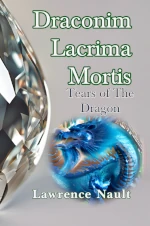
Draconim Lacrima Mortis
2023
Feeding The Fires
2024
Fingerprints In The Water
2025
Shattered Ice
2025
Free downloadable guides for educators, librarians, and book clubs.
Draconim: Lacrima Mortis is well suited for Grades 8–12 and can be taught as a 4–6 week cross-curricular unit connecting English Language Arts, Environmental Science, Social Studies/Civics, Media Studies, Art, and Indigenous Studies. Its curriculum value comes from the way the novel blends YA fantasy with real-world environmental issues, giving students opportunities to examine pollution, ecosystem damage, youth activism, corporate and government responsibility, media literacy, traditional ecological knowledge, personal identity, and community action through reading journals, literary analysis, research, discussion, creative response, and project-based learning.
Download PDFTheDraconim: Lacrima Mortis Book Club Discussion Guide provides readers, teachers, and book groups with a structured way to explore the novel’s major themes, including environmental responsibility, youth activism, connection to nature, personal identity, science and magic, hope, and sacrifice. It includes pre-discussion activities, theme-based questions, deeper engagement exercises, creative response prompts, environmental action planning, Indigenous environmental stewardship connections, recommended books and films, further reflection questions, and practical extensions such as community cleanups, awareness campaigns, and documenting local environmental change.
Download PDFFree downloadable guides for educators, librarians, and book clubs.
In development
Coming soonIn development
Coming soon