The Draconim Series Book 2
Lawrence Nault · YA Environmental Fantasy · Published 2024
Lawrence Nault wrote Feeding the Fires to explore what happens when wildfire is treated as an enemy to suppress instead of a force shaped by climate, land use, memory, and neglect. At its heart, the book is about the systems that feed disaster: political denial, misinformation, broken relationships with the land, and the human grief that follows environmental loss. What makes it distinct is the way it blends YA eco-fantasy with wildfire ecology, Indigenous knowledge, dragons, and youth-led courage without pretending the answers are simple.
Feeding the Fires came from watching the world burn and realizing how quickly we move on once the smoke is no longer in our own sky. Wildfires are often treated as isolated disasters, but they are never only that. They are the result of climate change, land use, political choices, failed management, drought, misinformation, and a long human habit of thinking nature can be controlled without consequence.
In this book, I wanted to look at fire differently. Fire is not the villain. Fire has always been part of the Earth’s systems, part of renewal, part of balance. The danger comes when we interrupt those systems, suppress what we do not understand, dry the land, ignore traditional ecological knowledge, and then act surprised when the flames return with more force than before. The dragons in the Draconim series are not here to solve the problem for us. They are witnesses, and through them the young characters are forced to see what adults too often refuse to see.
This is also a story about grief. Not only grief for people and places lost to fire, but grief for species, ecosystems, cultures, and futures being damaged by denial. Jacob, Hannah, Anne, and the others are ordinary young people carrying extraordinary awareness. Their courage does not come from being fearless. It comes from staying present when the truth is painful, and from understanding that action begins with listening.
I wrote Feeding the Fires for readers old enough to understand that climate stories are not distant warnings anymore. They are already here. For educators and librarians, I hope the book opens conversations about wildfire ecology, Indigenous knowledge, climate anxiety, misinformation, identity, and youth-led environmental action. For young readers, I hope it says something more personal: your fear is not weakness, your grief is not overreaction, and your voice matters before the next spark catches.
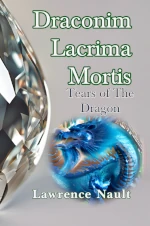
Draconim Lacrima Mortis
2023
Feeding The Fires
2024
Fingerprints In The Water
2025
Shattered Ice
2025
Free downloadable guides for educators, librarians, and book clubs.
Draconim: Lacrima Mortis is well suited for Grades 8–12 and can be taught as a 4–6 week cross-curricular unit connecting English Language Arts, Environmental Science, Social Studies/Civics, Media Studies, Art, and Indigenous Studies. Its curriculum value comes from the way the novel blends YA fantasy with real-world environmental issues, giving students opportunities to examine pollution, ecosystem damage, youth activism, corporate and government responsibility, media literacy, traditional ecological knowledge, personal identity, and community action through reading journals, literary analysis, research, discussion, creative response, and project-based learning.
Download PDFTheDraconim: Lacrima Mortis Book Club Discussion Guide provides readers, teachers, and book groups with a structured way to explore the novel’s major themes, including environmental responsibility, youth activism, connection to nature, personal identity, science and magic, hope, and sacrifice. It includes pre-discussion activities, theme-based questions, deeper engagement exercises, creative response prompts, environmental action planning, Indigenous environmental stewardship connections, recommended books and films, further reflection questions, and practical extensions such as community cleanups, awareness campaigns, and documenting local environmental change.
Download PDFFree downloadable guides for educators, librarians, and book clubs.
Feeding the Fires is suitable for Grades 7–12 and connects strongly with Language Arts, Environmental Science, Social Studies, and Indigenous Studies. In Language Arts, the novel supports literary analysis, character development, multiple perspectives, symbolism, metaphor, and eco-fantasy genre study; in Environmental Science, it opens discussion around fire ecology, climate change, forest management, ecosystem relationships, and environmental activism. Its Social Studies connections include contemporary environmental policy, social media and activism, cultural heritage, and community responses to disaster, while its Indigenous Studies connections include traditional ecological knowledge, Indigenous fire management, cultural identity, intergenerational trauma, and cultural reconnection. The book is especially useful for interdisciplinary classrooms exploring how story can help students think critically about wildfire, climate anxiety, environmental responsibility, and the relationship between human systems and the living world.
Download PDFThe Feeding the Fires Book Club Discussion Guide provides readers with structured ways to explore the novel’s blend of YA eco-fantasy, wildfire ecology, Indigenous knowledge, family identity, and environmental action. It includes pre-discussion activities, opening questions, character-focused prompts, theme and symbolism discussions, and questions connecting the story to real-world climate change, fire management, youth activism, social media, and environmental policy. The guide also offers extended activities such as research projects, creative responses, local environmental investigations, and group action planning, along with suggested further reading and discussion guidelines to help book clubs, classrooms, libraries, and community groups move naturally between literary analysis, personal reflection, and real-world ecological responsibility.
Download PDF